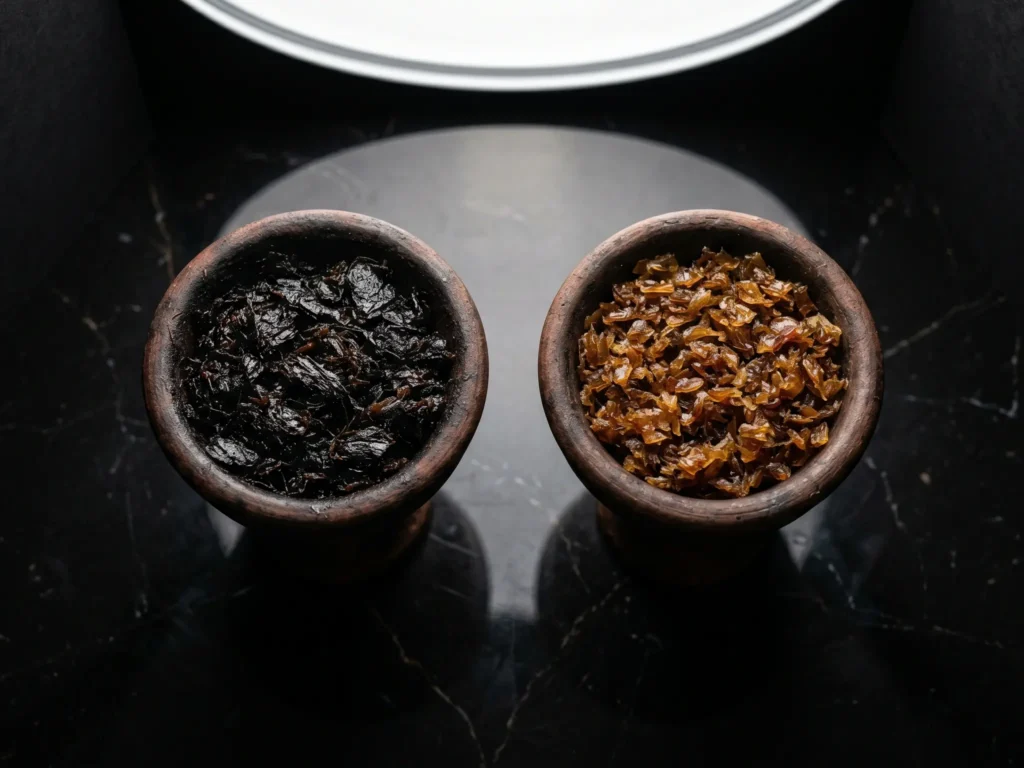

Fluff vs dense packs are two different ways to load a hookah bowl. A fluff pack leaves more air between the tobacco strands for a lighter, more open pack, while a dense pack compresses the tobacco for a firmer, longer-lasting setup. Choosing between them comes down to flavour intensity, session length, tobacco texture, and heat management.
A jar of premium leaf can still turn into a harsh, hard-to-pull mess if the packing method doesn’t match what the smoker actually wants out of the session. At its core, it’s a trade-off: a fluffier pack opens up airflow and delivers a stronger, more immediate flavour hit, while a denser pack trades some of that intensity for a longer, steadier session. The same tobacco can be packed either way — the real question is how the session should feel. Bowl choice is the one variable that still depends on the tobacco itself, covered separately below.
General Guideline: Want bold, upfront flavour? Lean fluffier. Want a longer session with a milder, steadier draw? Lean denser. Either way, a small gap — often around 1–2mm depending on the setup — between the tobacco and the foil or HMD can help prevent direct contact and reduce the risk of a harsh session.
| Feature | Fluff Pack | Dense Pack |
| Packing style | Loose | Compressed |
| Airflow | More open | More restricted |
| Flavour | More immediate | More gradual |
| Session | Shorter | Longer |
| Draw | Easier | Firmer |
| Heat response | Faster | Slower, steadier |
| Best for | Shorter, flavour-forward sessions | Longer, steady sessions |
Three things decide how a pack performs once the coals go on:
- Heat distribution — how evenly warmth spreads through the tobacco mass
- Airflow — how easily smoke pulls through the bowl and into the hose
- Space to breathe — the small gap between tobacco and foil/HMD that stops scorching
Get those three right and the tobacco does the rest of the work.
What is a Fluff Pack? (Bolder Flavour, Shorter Session)

A fluff pack uses gravity rather than pressure to build the bowl. Tobacco is loosely sprinkled in rather than pressed down, leaving natural air pockets that maximise airflow. That open airflow can produce a stronger, more immediate flavour profile with each draw.
The trade-off is longevity: fluff-packed bowls tend to run shorter, often around an hour depending on bowl size, tobacco amount, and heat management, since the tobacco burns through faster with all that airflow. Fluff packing is often associated with blonde leaf, but the appeal really comes down to preference — smokers chasing intensity over a long session tend to reach for it regardless of tobacco type.
Quick Facts
- Flavour: Strong, immediate, upfront
- Airflow: High, open, easy draw
- Typical session: Shorter, often around an hour depending on setup
How to Build the Perfect Fluff Pack
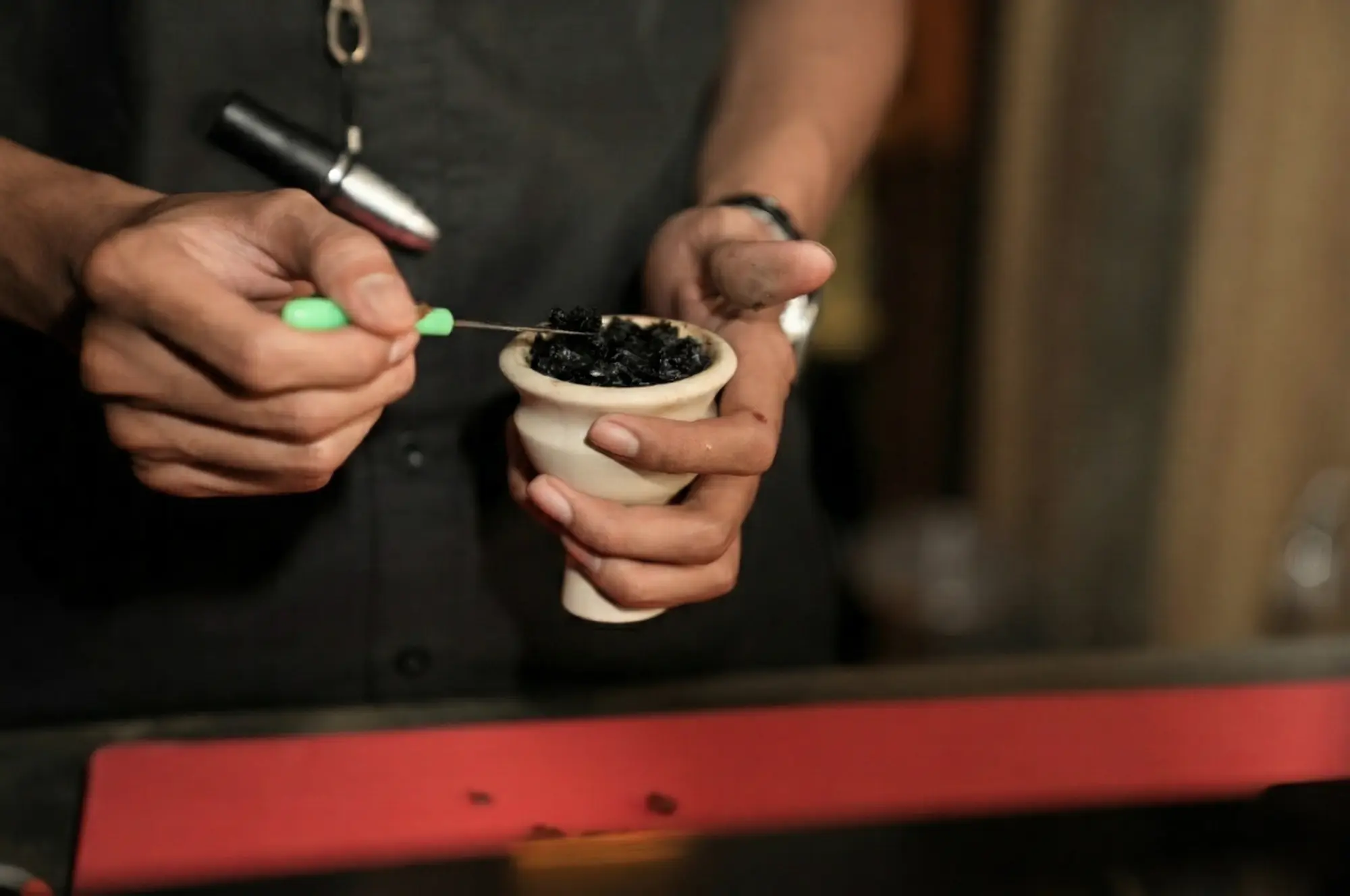
- Break up clumps first. Use a fork to loosen the tobacco before it goes anywhere near the bowl — compressed or clumped leaf defeats the whole point of a fluff pack.
- Sprinkle, don’t scoop. Drop small amounts into the bowl from a slight height and let gravity settle it naturally.
- Fill to just below the rim. Leave the same small gap mentioned earlier so foil or an HMD doesn’t scorch the top layer.
- Resist the urge to press. Any compression at this stage turns a fluff pack into an accidental semi-dense pack — leave it loose.
What is a Dense Pack? (Milder Flavour, Longer Session)
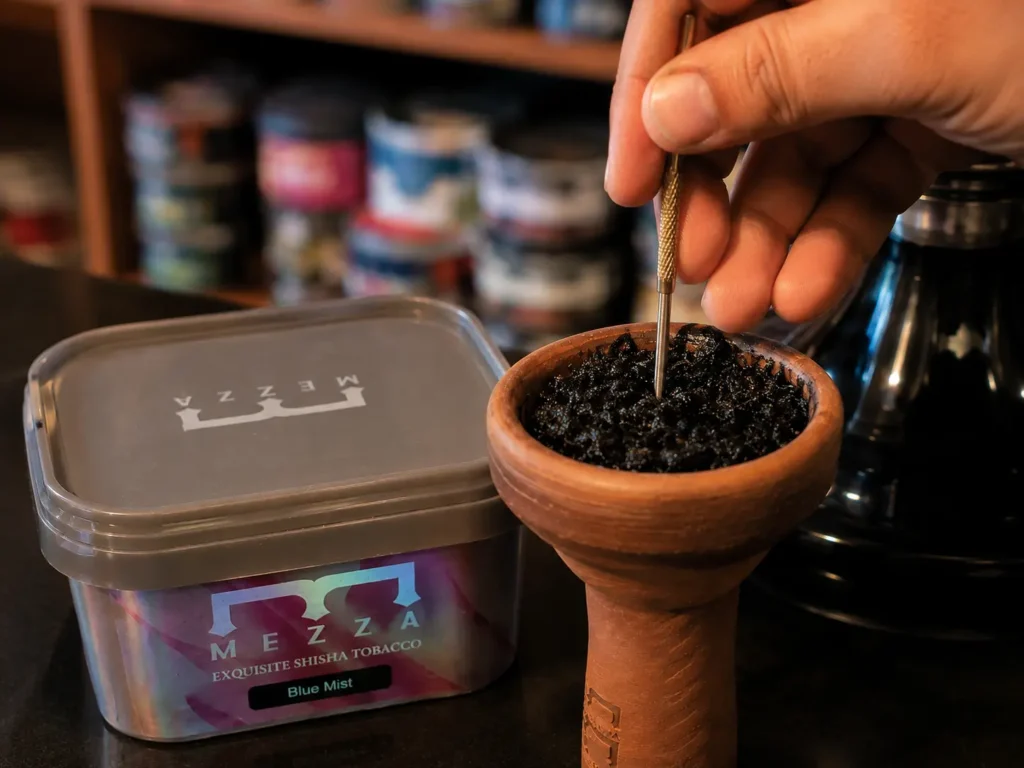
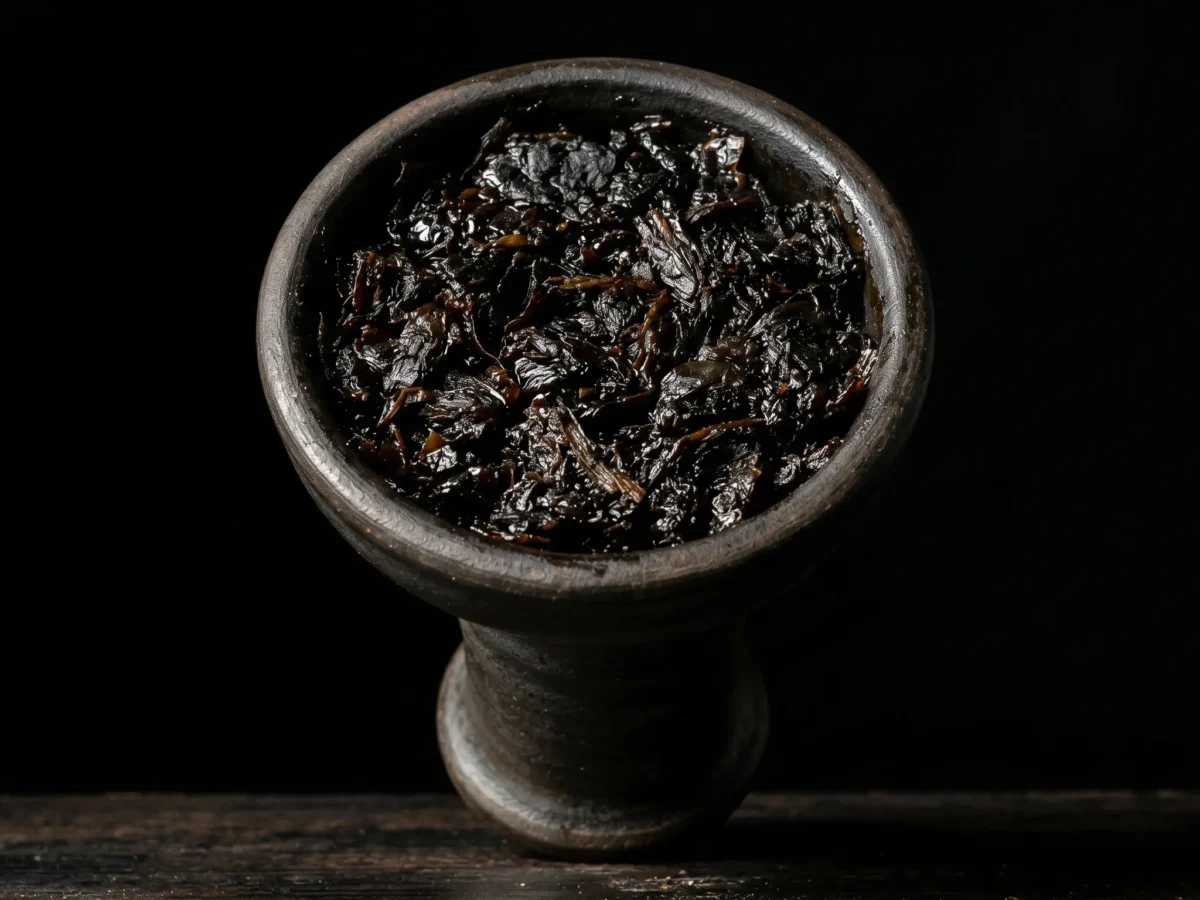
A dense pack is the opposite approach: tobacco is compressed firmly to eliminate air gaps, which restricts airflow and slows the burn. With less air reaching the tobacco, flavour comes through more subtly than a fluff pack — but that same restriction is what stretches the session out, often to 60–90 minutes or more depending on bowl size, tobacco amount, and heat management.
The pack style isn’t dictated by the tobacco itself — Mezza’s Burley-based blends, for example, can be built either way. A dense pack suits smokers who want that same Mezza blend to stretch into a longer, mellower session; a fluff pack suits smokers after a bolder hit sooner. Either way, the leaf stays the same — only the feel of the session changes. The full lineup is worth a look on the Mezza flavours page.
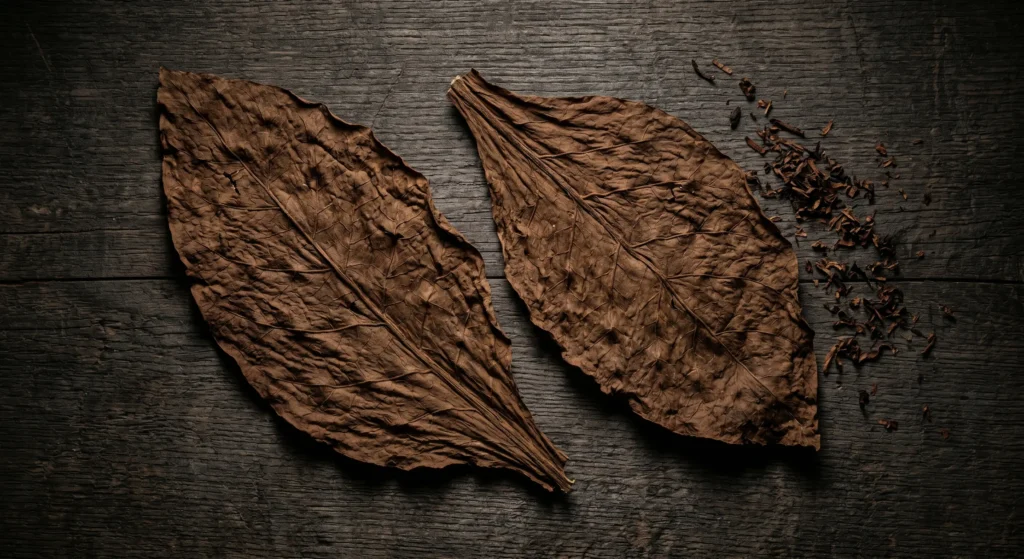
Dense packing is far less forgiving than a fluff pack. Get the compression or heat management wrong and the top layer scorches fast. For a closer look at how Burley tobacco behaves under heat, the Dark Leaf Shisha guide covers the full picture.
Quick Facts
- Flavour: Milder, subtler, builds slowly
- Airflow: Restricted, firm draw
- Typical session: Longer, often 60–90+ minutes depending on setup
How to Build a Proper Dense Pack
- Start with fluffed tobacco. Break up clumps the same way as a fluff pack before compressing — an evenly fluffed base compresses more consistently.
- Overfill slightly. Pack tobacco just past the rim before pressing, since compression reduces the overall volume.
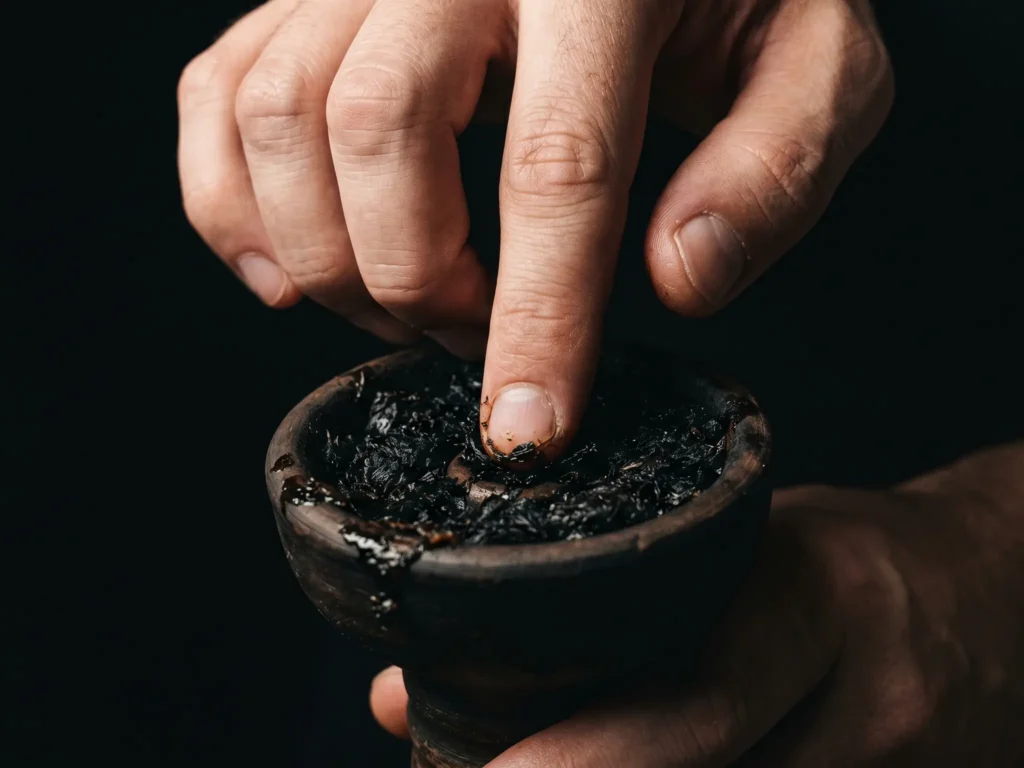
- Press down firmly and evenly. Use a finger or packing tool to compact the tobacco, leaving a small gap below the rim — often a touch wider than a fluff pack, around 2–3mm depending on the setup.
- Match the bowl to the tobacco. Unlike packing density, bowl choice does depend on the leaf. Burley and other dark-leaf tobaccos are often paired with bowls that provide strong heat transfer, such as Classic, Killer, or Alien-style bowls. Juicier blonde-leaf tobaccos are commonly used with Phunnel-style bowls, which help retain moisture.
- Manage heat gradually. Start with two coconut shell charcoal coals, add a third once the session has activated, and allow 5–8 minutes of warm-up before the first real draw.
Dense Pack vs. Overpack: What’s the Difference?
A dense pack and an overpack often get confused, but they describe different things. Dense pack is about how firmly the tobacco is compressed; overpack is about how high it’s piled. An overpack can start from either a fluff or a dense base — the defining feature is packing the tobacco high enough that it makes direct contact with the foil or HMD, skipping the small gap covered earlier.
That direct contact delivers a noticeably more intense hit, in both flavour and nicotine, since the tobacco right against the heat source cooks harder and faster. The trade-off runs the other way to what many smokers expect: sessions tend to run shorter rather than longer, since the tobacco burns through more quickly.
Overpacking is considered an advanced technique for good reason. Get the heat management even slightly wrong with the tobacco sitting that close to the foil or HMD, and the session turns harsh fast. It’s worth mastering a standard fluff or dense pack first before attempting an overpack.
The “In-Between”: A Semi-Dense Middle Ground
Packing sits on a spectrum rather than two fixed options. Many smokers use a middle-ground approach often described as semi-dense — a bit more tobacco than a fluff pack, with a touch of light pressing. Enough compression to slow the burn slightly, without the full firmness of a true dense pack.
Semi-dense is often the sweet spot for smokers who want a bit of both — more flavour presence than a full dense pack, without sacrificing as much session length as a straight fluff pack. It’s worth experimenting with once the basic fluff vs dense pack trade-off starts to feel natural.
Which Pack Suits the Goal?
With fluff, dense, semi-dense, and overpack all on the table, the simplest way to choose is working backwards from what’s actually wanted out of the session.
| Goal | Recommended pack |
| Strong, upfront flavour | Fluff |
| Longer session | Dense |
| Balance of flavour and longevity | Semi-dense |
| Maximum intensity, shorter session (advanced) | Overpack |
| Mezza Burley | Fluff, semi-dense, or dense — depending on the goal |
The tobacco doesn’t need to change to fit the goal. Mezza’s Burley blends hold up across all three core packing styles, which is part of what makes them practical for smokers who like to switch things up between sessions rather than being locked into one method.
Weight vs. Volume: What Does “Density” Actually Mean?
Two schools of thought describe pack density differently, and it’s a genuine source of confusion. Some guides calculate exact gram percentages against a bowl’s maximum capacity — a weight-based approach that suits smokers chasing precision. Others describe density purely by look and feel — a volume-based, visual approach.
| Approach | Pros | Cons |
| Weight-based (grams) | Precise, repeatable, easy to compare across bowls | Requires a digital scale, slower for casual sessions |
| Volume-based (visual/tactile) | Fast, intuitive, no equipment needed | Less precise, takes practice to judge by feel |
Everyday smokers rarely need a scale. Visual compression and tactile feel — covered next — get the packing density right the vast majority of the time, without any extra gear required.
The Tactile “Poke Test”: How Should Your Pack Feel?
Despite the name, this isn’t about literally poking the tobacco — it’s a light press check done before coals go on. Once the foil or HMD lid is in place, press a finger gently against the top of the pack and notice how it responds.
- Sinks in with no resistance → Fluff pack
- Springs back slightly → Semi-dense pack
- Barely moves, feels firm → Dense pack
A properly built dense pack should still have a tiny bit of give. Rock-hard with zero movement usually means over-compression, which pushes draw resistance too high and can choke airflow entirely rather than just slowing it down.
Heat Management: HMDs vs. Aluminium Foil

Moving from traditional foil to a heat management device (HMD) changes how a pack performs, even when the packing method stays identical. HMDs distribute heat in a circular pattern across the whole bowl, while foil concentrates heat where coals touch the surface directly.
That small gap mentioned earlier still matters with either setup, whatever the exact width. HMDs tend to retain heat more efficiently, which means a fluff or semi-dense pack may need fewer coals than a foil setup to avoid scorching the top layer — worth adjusting for smokers who’ve recently switched.
Hookah Smoke Fix: Mid-Session Troubleshooting

A session doesn’t need to be abandoned just because the smoke turns bad halfway through. Most problems trace back to airflow, heat, or moisture — and each has a quick fix.
| Problem | Likely Cause | Fix |
| Weak smoke, hard draw | Airflow blocked, pack too tight | Use a poker to create vertical channels through the tobacco |
| Harsh, burnt smoke | Coals too close, rim gap lost | Remove coals, lift foil/HMD, tap the top layer to restore the gap, restart on lower heat |
| Muted, flat flavour | Not enough heat, tobacco too cold | Add another coal, take a few pulls until the flavour comes through, then settle on two coals in the centre |
These fixes work regardless of which side of the fluff vs dense pack spectrum a session started on — the underlying causes are the same either way.
How These Recommendations Were Put Together
The guidance in this piece is built from hands-on session testing across multiple bowl types, tobacco blends, and heat setups — including extended runs with Mezza’s own Burley-based blends — cross-checked against techniques widely used across the hookah community. Where session length or flavour intensity is mentioned, it reflects a typical range observed across setups, not a fixed rule, since bowl size, coal count, tobacco moisture, and heat management all shift the result.
Ready to Put a Proper Pack Into Practice?
Getting fluff vs dense pack technique right transforms a session from mediocre to genuinely lounge-quality — and matching the pack to what’s actually wanted from the session, whether that’s bold flavour or a longer smoke, matters just as much as the pressing technique itself. For a closer look at Burley tobacco, bowl choice, and storage specific to dark leaf, the Dark Leaf Shisha guide is the natural next read.
Ready to put a dense pack to the test? Explore the full Mezza flavour range on the flavours page, then check the Mezza Mixology guide and the 9 Must-Try Mezza Blends article for mixing inspiration once the packing technique is dialled in.
Frequently Asked Questions
What is the difference between fluff and dense packing? A fluff pack loosely sprinkles tobacco to maximise airflow, giving a stronger, more upfront flavour over a shorter session — often around an hour, depending on setup. A dense pack firmly compresses tobacco to restrict airflow, giving a milder, steadier flavour over a longer session, often 60–90+ minutes depending on setup. The fluff vs dense pack choice comes down to personal preference — how intense the flavour should feel, and how long the session should run — rather than the tobacco type itself.
How do you pack blonde leaf tobacco? Blonde leaf can be packed either way, depending on the session wanted. For a fluff pack: break up clumps with a fork, sprinkle loosely into the bowl without pressing, and leave a small gap — often around 1–2mm depending on the setup — below the rim for airflow. This gives a stronger, more upfront flavour over a shorter session.
Why is my hookah harsh? Harshness usually means the top layer of tobacco has scorched, often from coals sitting too close or the rim gap disappearing during the session. Removing coals, lifting the foil or HMD, and restoring the gap before restarting on lower heat generally fixes it.
How do I know if my bowl is packed too tightly? A light press test is the fastest check. A properly packed dense pack should still spring back slightly under light pressure — zero give at all is a sign of over-compression, which can choke the draw completely.
Is overpacking safe for a hookah session? Overpacking can work, but it’s less forgiving than a standard fluff or dense pack. Because the tobacco sits high enough to touch the foil or HMD directly, it delivers a more intense hit in flavour and nicotine — but that same contact turns harsh far more easily if the heat isn’t managed carefully. It’s generally worth mastering a standard pack first before attempting an overpack.
What bowl is best for a dense pack? Bowl choice depends more on the tobacco than the pack density itself. Burley and other dark-leaf tobaccos are often paired with bowls that provide strong heat transfer, such as Classic, Killer, or Alien-style bowls. Juicier blonde-leaf tobaccos are commonly used with Phunnel-style bowls, which help retain moisture.
Is a fluff pack or dense pack better for dark leaf tobacco? Neither is strictly “better” — Burley and other dark-leaf tobaccos can be packed either way. A fluff pack brings out a stronger, more upfront flavour hit sooner; a dense pack stretches the same tobacco into a longer, steadier session. The choice comes down to what’s wanted from the session, not the leaf itself.
Can you use the same bowl for a fluff and dense pack? Generally yes — most bowls can handle either packing density. Bowl choice mainly comes into play with the tobacco being used rather than whether the pack is fluff or dense, so the same bowl typically works for both once it suits the tobacco in the bowl.
Which packing method gives more smoke? A fluff pack usually produces bigger clouds sooner, since the open airflow lets more air move through the tobacco with every draw. A dense pack tends to produce steadier, more measured clouds over a longer stretch, since the restricted airflow slows things down rather than cutting cloud production altogether.